
Product teams rarely struggle because information doesn’t exist. The problem is usually that nobody knows where the latest decision, specification, or implementation detail actually lives.
Product context gets scattered quickly across Jira tickets, Slack threads, Figma comments, roadmap docs, meeting notes, and individual team habits. Over time, teams stop trusting whether documentation is current, developers rebuild features that already exist, and product decisions lose their original context.
The problem gets worse as organizations grow. New hires rely on tribal knowledge instead of documented reasoning. Different teams solve similar problems differently because prior decisions were never centralized properly.
A centralized knowledge management system helps product teams keep specifications, design decisions, technical documentation, and implementation history searchable and governed across the organization.
Here are ten practical ways AllyMatter helps product teams reduce documentation chaos and maintain more consistent product operations.
1. Preserving design decisions and product thinking
“Why did we design this feature this way?” It’s a question that comes up often, especially when facing choices that seem like they were settled long ago. When design decisions and rationales aren’t documented, teams waste time revisiting resolved questions or making inconsistent choices.
AllyMatter preserves the reasoning behind product decisions with searchable records that maintain context even as teams change. By documenting not just what was built but why it was built that way, teams build a foundation for preserving institutional knowledge as people move on.
Consider a product team designing a critical user flow. With AllyMatter, they document not just the final design but the research insights, alternative approaches considered, and business constraints that shaped their decisions, creating a reference that current and future team members can actually rely on.
2. Centralizing product requirements documentation
Product requirements become difficult to maintain once specifications spread across Jira tickets, Figma comments, Slack threads, meeting notes, and disconnected Google Docs. Developers waste time confirming which version is current instead of building against a trusted specification.
AllyMatter centralizes all product requirements with version-controlled documentation accessible to your entire development organization. Your product managers can create standardized requirement templates, ensuring consistent documentation across features. Developers gain immediate access to the latest specifications, reducing the constant back-and-forth that delays releases.
3. Maintaining consistent design standards
Products designed without clear documentation of standards and guidelines inevitably develop fragmented experiences over time. What starts as minor inconsistencies in button styles or interaction patterns eventually creates a disjointed product that confuses users and undermines trust.
AllyMatter helps maintain consistent quality through accessible design systems that keep implementation aligned across features and product lines. Your design team can document component libraries, interaction patterns, and visual standards in one searchable repository that guides implementation as the product evolves and new designers join the team.
For example, a product team might maintain living documentation of UI components with usage guidelines, ensuring that primary actions, navigation patterns, and form designs remain consistent as the product grows.
4. Accelerating product team onboarding
Product onboarding slows down quickly when new hires have to reconstruct how the product works from scattered conversations and outdated documentation instead of a trusted internal knowledge base.
AllyMatter gives new team members a structured path through your product knowledge base, so they understand not just how features work but why they were implemented.
A structured internal knowledge base means new product managers, designers, and developers become productive contributors faster, with clear documentation of product history, roadmap, and technical architecture accessible from day one.
5. Preventing feature duplication
When existing components aren’t documented, developers waste time recreating solutions that already exist. This problem compounds in larger organizations where teams might work on similar features without awareness of each other’s efforts.
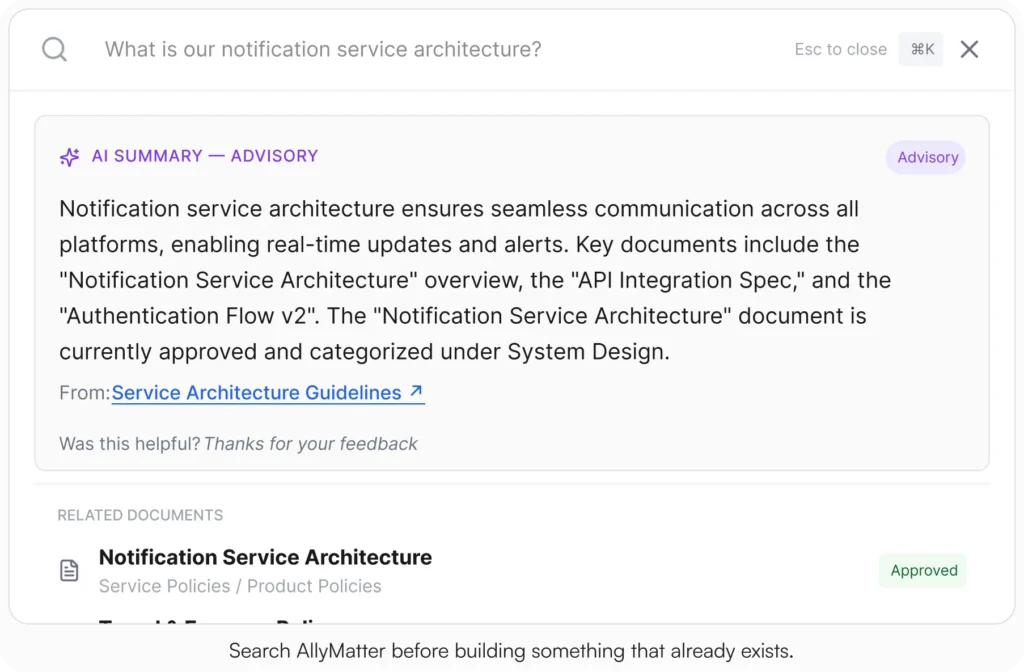
AllyMatter gives teams one searchable place for reusable technical specifications, APIs, integration workflows, and implementation details so developers can reference existing solutions before rebuilding them.
For instance, when a team needs to implement a new notification system, they can search AllyMatter to discover that another team has already built a configurable notification service, complete with documentation on how to integrate it.
Start your 30-day free trial. No credit card to start.
6. Moving product documentation through review faster
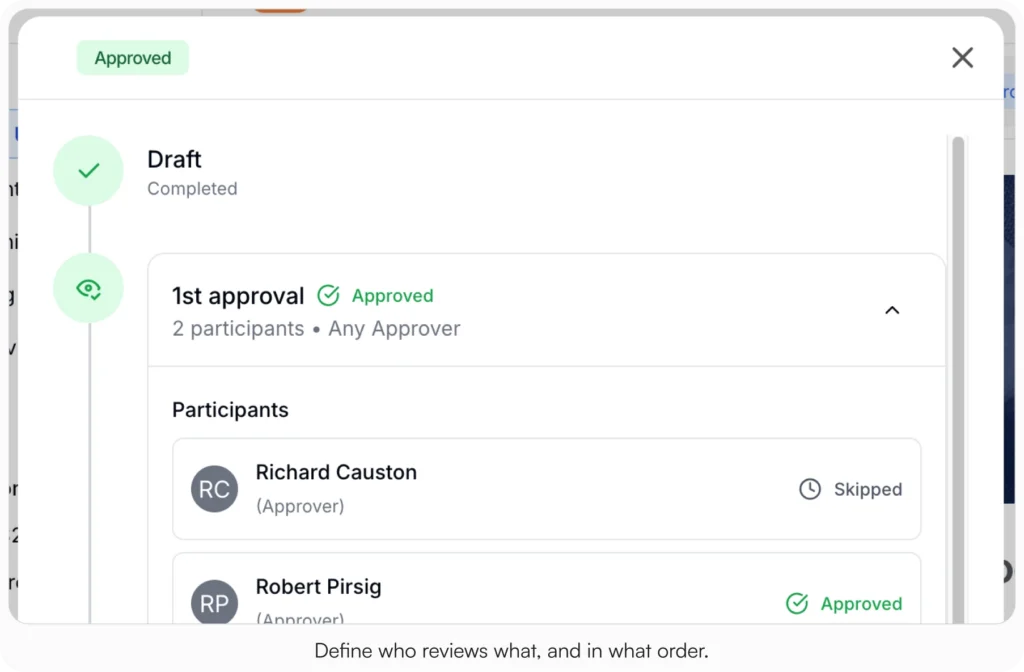
Product documentation often stalls in review cycles because nobody is sure who still needs to approve changes or whether the current version is actually finalized.
AllyMatter lets teams define custom approval workflows, ensuring the right people review product specifications, technical documentation, or release notes at the right time. With built-in signatures and complete audit trails, your team maintains accountability while reducing the time from documentation creation to approval and implementation.
7. Keeping documentation current across every team in the release cycle
Product work crosses multiple teams constantly. Product managers, designers, engineers, QA teams, and legal reviewers all depend on shared documentation staying current and accessible throughout the release cycle.
AllyMatter gives these teams a shared documentation space with secure commentary and version control. Team members can contribute to documents, tracking changes and discussions in context rather than across fragmented email threads or chat messages.
When a product spec needs refinement, stakeholders can comment directly on specific sections, suggest changes, and resolve discussions, all while maintaining a clear record of decisions made and their rationale.
8. Ensuring regulatory compliance and documentation
Product teams in industries like healthcare, finance, and manufacturing face strict compliance requirements for documentation. Meeting these standards without overburdening the development process presents a real challenge.
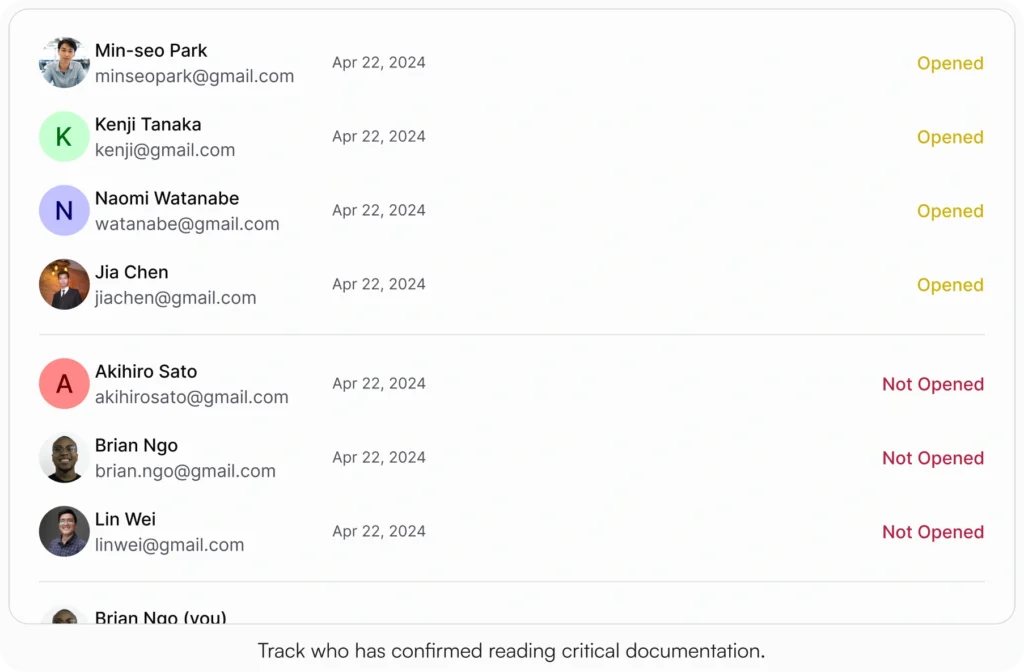
AllyMatter’s complete audit trail tracks every change for full accountability and compliance. The platform’s acknowledgment features ensure team members formally confirm they’ve read critical documentation, with flexible options from simple acknowledgment buttons to full third-party e-signature integration.
This approach lets product teams maintain velocity while satisfying regulatory requirements in highly regulated industries.
9. Retaining product knowledge when team members move on
Product knowledge usually disappears gradually. Knowledge silos form before most teams notice, and by the time someone goes looking for a decision or a rationale, the person who made it has moved on.
A team changes ownership, priorities shift, or key employees leave, and suddenly nobody remembers why a technical tradeoff was made or which customer problem a feature was originally solving.
AllyMatter gives product teams a structured way to document feature rationale, research findings, implementation decisions, and historical context so knowledge stays accessible beyond the people who originally created it.
10. Keeping documentation reliable as the team grows
Documentation systems that work for a 10-person product team usually break once multiple product lines, squads, and review processes start overlapping. Teams create duplicate workflows, documentation structures drift, and nobody is confident which processes are still current.
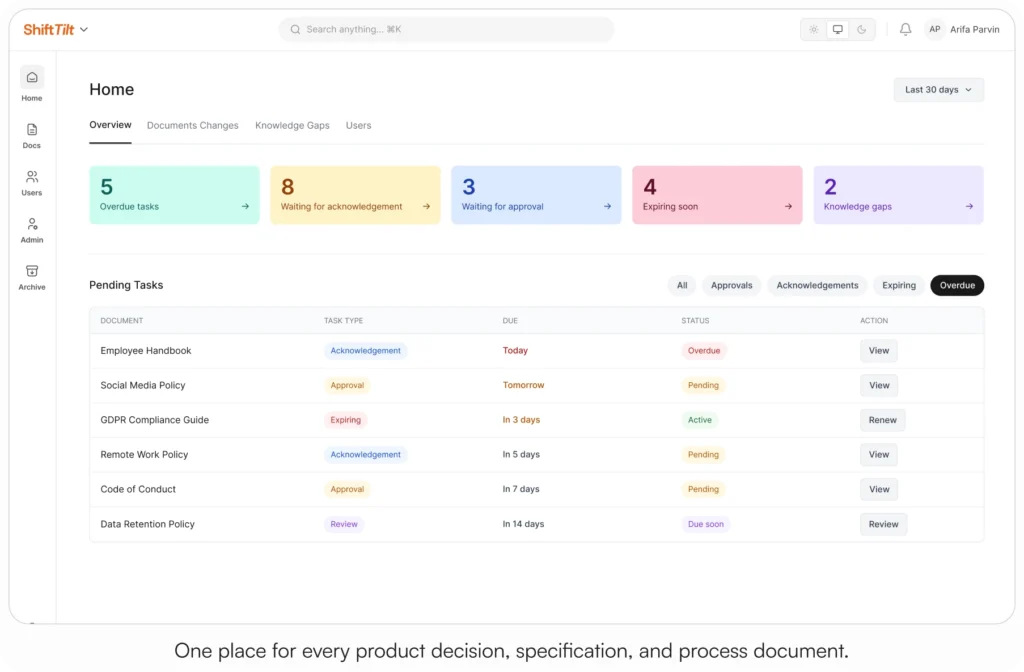
AllyMatter helps product organizations organize documentation by product line, release process, team ownership, or operational context while maintaining clearer visibility into approvals, updates, and access controls as the organization grows.
Keeping product knowledge usable as teams grow
Product teams move faster when decisions, specifications, and implementation history stay accessible after the original conversations end.
The problem isn’t usually a lack of information. It’s that product knowledge becomes fragmented across too many systems, too many conversations, and too many undocumented decisions over time.
AllyMatter gives product organizations a structured way to keep product documentation searchable, governed, and reusable as teams grow and products become more complex.
Start your 30-day free trial. No credit card to start, and a 30-day money-back guarantee if you convert and change your mind.
Not ready for a trial? Migration from Confluence or Notion is on us when you decide. We’ll move your existing docs over and have you up and running in about a week.
Frequently asked questions
How does AllyMatter differ from traditional product documentation tools like Confluence or Notion?
While tools like Confluence and Notion work well for collaborative drafting, they require significant configuration to support structured approval workflows, tag-based access control, acknowledgment tracking, and audit trails. AllyMatter provides these as core features, making it easier for product teams in regulated or fast-growing environments to keep documentation trusted and current.
Can AllyMatter integrate with existing product development tools like Jira, Figma, or GitHub?
AllyMatter is where finished product documentation lives. Teams that use Jira for issue tracking or Figma for design work still need somewhere for decisions, specifications, and processes to be searchable and governed long-term. That’s what AllyMatter is built for.
How long does it typically take to implement AllyMatter for a product team?
Most product teams begin using AllyMatter within the first week. Getting full value depends on how consistently teams document decisions and processes as they work, but the platform is designed to be accessible from day one without a lengthy setup process.
What happens to our existing product documentation when migrating to AllyMatter?
AllyMatter’s team can assist with migration from existing platforms. Teams typically start by bringing in high-priority documentation first, then build out their knowledge base from there. For migration support, reach out directly through the AllyMatter website.
How does AllyMatter handle sensitive product information and intellectual property?
AllyMatter provides granular access controls and role-based permissions so sensitive product information is only visible to the right team members. Complete audit trails track every change and modification, and approval workflows ensure only authorized team members can publish or update critical documentation.

Founder of AllyMatter I’m founder of AllyMatter, an operations-first knowledge base for growing companies. Before AllyMatter, I co-founded Syren Cloud and helped scale it into a 300-person organization across two countries, leading marketing, operations, and HR. We moved fast, served demanding customers, and learned the hard way that internal knowledge systems built for help docs or IT don’t solve day-to-day operations. AllyMatter is my answer—tools that turn tribal knowledge into trusted, searchable processes. This blog shares the playbooks, checklists, and lessons I wish I’d had while scaling.