Organizations are constantly seeking ways to optimize operations, improve efficiency, and maintain competitive advantage. Yet, amid the pursuit of cutting-edge technologies and innovative strategies, one fundamental element often gets overlooked: comprehensive documentation.
According to a Gartner survey, 47% of digital workers struggle to find the information needed to do their jobs effectively. McKinsey Global Institute reports that the average interaction worker spends an estimated 20 percent of their workweek looking for internal information or tracking down colleagues who can help with specific tasks.
Four signals you’re paying the documentation tax:
- Senior leaders are still pulled into questions they delegated months ago
- Onboarding costs more in senior time than salary for the first 90 days
- An audit, dispute, or transition produces a multi-week documentation reconstruction project
- Operational drift between teams or locations is producing inconsistency you can measure
For Chief Human Resources Officers and Chief Operations Officers, addressing this challenge isn’t just about improving efficiency. It’s about unlocking your organization’s full potential.
The hidden costs of poor documentation
When documentation is inadequate, fragmented, or outdated, the consequences ripple throughout the organization. New employees struggle to get up to speed, seasoned staff waste time searching for information, and critical knowledge walks out the door when employees leave.
A manufacturing company loses a senior engineer who’s been with the organization for 15 years. Despite their invaluable expertise, much of their knowledge was never properly documented. The result: production delays, quality issues, and a lengthy, expensive training period for their replacement. What could have been a smooth transition becomes a significant operational disruption.
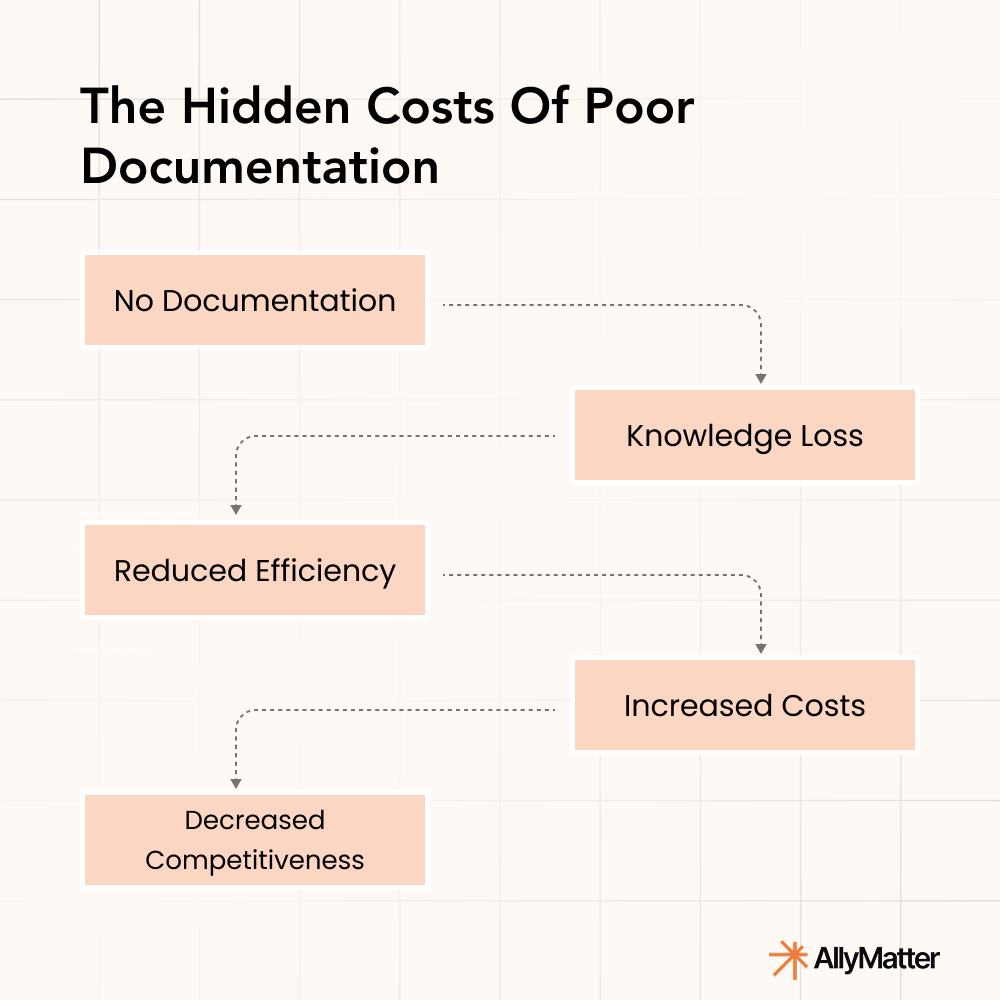
This pattern plays out daily across industries, creating invisible drains on productivity and morale. Comprehensive documentation offers a solution that benefits both operations and human resources.
The CHRO perspective: documentation as a people strategy
For CHROs, documentation goes far beyond record-keeping. It’s a strategic asset that directly impacts workforce effectiveness and satisfaction.
Employee onboarding and training
New hires need structure and clarity. Well-documented onboarding processes ensure a seamless transition, reducing the time it takes for employees to become productive. A centralized knowledge repository lets HR teams:
- Standardize training programs
- Reduce repetitive questions
- Provide easy access to policies, role expectations, and performance guidelines
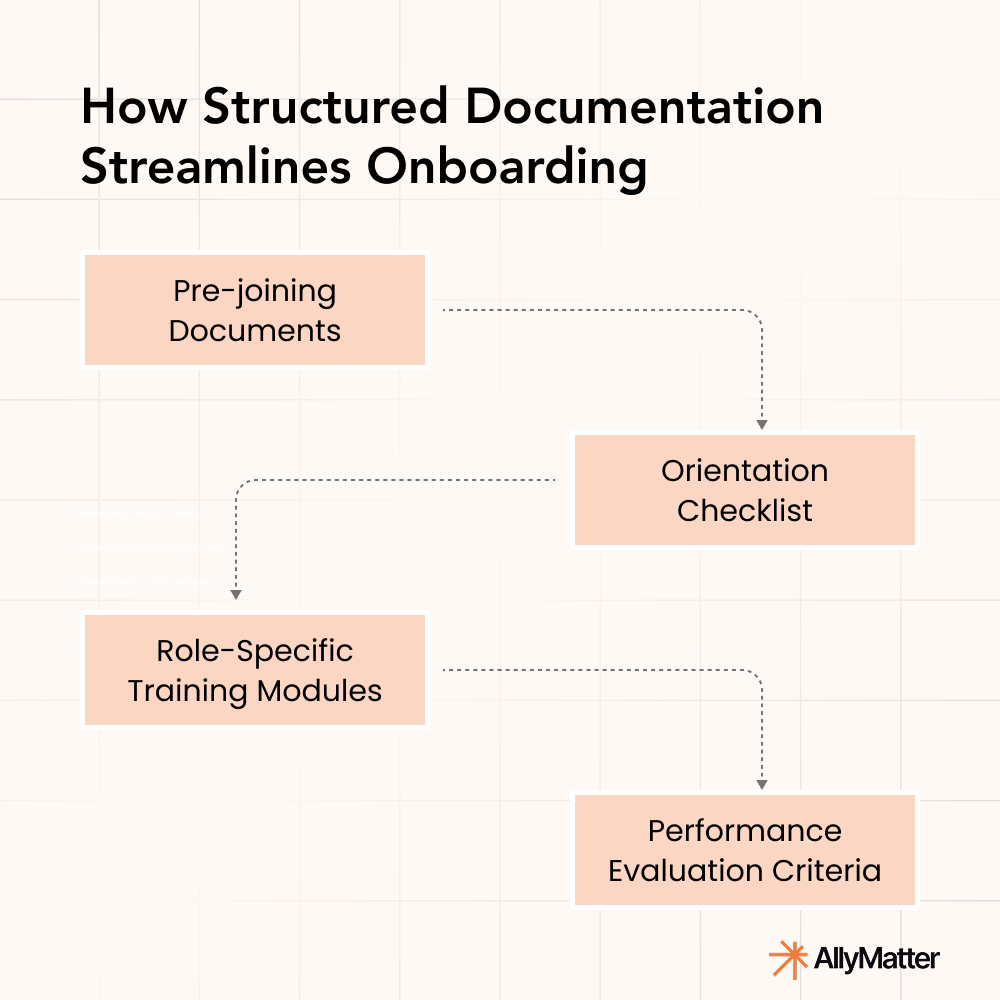
A growing tech company struggling with inconsistent onboarding creates a digital repository of HR policies, training materials, and SOPs. The result: a significant reduction in onboarding time and increased employee confidence from day one.
Compliance and risk mitigation
HR compliance is a high-stakes responsibility. Without proper documentation, organizations expose themselves to legal risk, penalties, and reputational damage. From employee handbooks to training certifications, CHROs rely on documentation to ensure:
- Alignment with labor laws and industry regulations
- Consistency in handling workplace disputes and grievances
- Proper record-keeping for audits and legal protection
When documentation is lacking, organizations expose themselves to material legal and financial risk. Thorough documentation provides protection during audits or legal challenges, potentially saving millions in fines or settlements.
Knowledge retention and workforce continuity
When experienced employees leave, they take valuable institutional knowledge with them. Documenting critical HR processes creates a knowledge base that transcends individual employees:
- Documentation prevents the loss of critical expertise and best practices
- Clear documentation reduces confusion and errors during employee transitions
- Properly documented processes minimize disruption when key team members depart
An experienced HR director at a growing tech company watches departing employees consistently take critical procedural knowledge with them. When their benefits coordinator leaves suddenly, the replacement spends weeks struggling to understand enrollment deadlines, vendor contacts, and approval workflows that existed only in their predecessor’s memory. The pattern repeats across organizations daily, which is why systematic knowledge capture matters more than individual expertise.
Conflict resolution and performance management
Clear documentation eliminates ambiguity in employee expectations and performance evaluations. By standardizing HR policies, organizations:
- Foster fair and transparent performance reviews
- Reduce disputes over job roles and responsibilities
- Create an equitable work environment
The consistency empowers managers to give objective feedback based on established criteria. Well-documented performance standards help employees understand exactly what success looks like in their roles.
The COO perspective: documentation as an operational imperative
For COOs focused on optimizing performance and ensuring operational excellence, documentation provides the foundation for efficiency, consistency, and scalability.
Operational consistency and efficiency
Without proper documentation, processes drift over time and vary between teams or locations. This inconsistency leads to quality issues, customer dissatisfaction, and inefficiency. Documentation establishes clear standards and procedures, ensuring consistency across the organization regardless of who’s performing the task or where:
- Establish repeatable, scalable processes
- Reduce dependency on specific employees
- Minimize disruptions caused by personnel changes
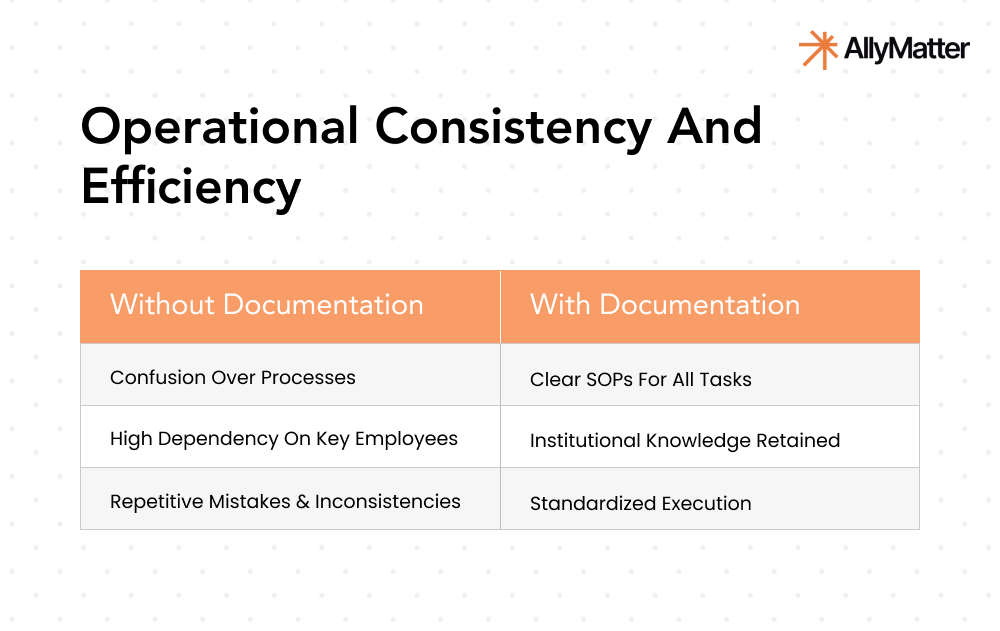
A restaurant chain notices significant quality variations between locations. Investigation reveals that each restaurant has developed slightly different procedures for food preparation. By documenting standardized processes and ensuring adherence across all locations, they not only improve quality but reduce waste and training costs.
Risk management and disaster recovery
When a crisis strikes, clear documentation becomes invaluable. Whether facing a natural disaster, cybersecurity breach, or unexpected leadership change, organizations with well-documented contingency plans respond quickly and effectively:
- Establishing contingency plans
- Creating a structured disaster recovery strategy
- Ensuring a smooth transition during leadership changes
A financial services firm’s primary data center experiences a prolonged power outage. Because steps for failover are clearly documented and regularly tested, they maintain operations with minimal disruption while competitors struggle for days to restore service.
Removing silos and enhancing cross-department collaboration
When departments operate in silos, inefficiencies arise. A centralized knowledge management system promotes better communication and synergy between HR, operations, finance, and other teams. Documenting and sharing best practices across departments fosters:
- Streamlined decision-making
- Faster problem resolution
- Greater alignment of company goals
A global financial services firm implements an internal knowledge-sharing system. The result: reduced redundant work and improved collaboration between HR and operations, saving thousands of work hours annually.
Scalability and growth
As businesses expand, they must scale operations effectively. Standardized documentation allows organizations to:
- Replicate successful processes in new locations
- Train new employees efficiently
- Ensure quality control and adherence to best practices
A SaaS company uses structured documentation to standardize its customer support processes, allowing it to scale the team from 50 to 200 employees without a dip in service quality.
Shared priorities for CHROs and COOs
Compliance and legal protection
Both HR and operations leaders depend on documentation to ensure regulatory compliance and avoid legal complications. Whether HR policies or operational safety protocols, clear documentation provides a safety net.
Enhancing employee productivity
When employees have easy access to well-documented processes and policies, they spend less time searching for information and more time executing tasks. The result is improved productivity and job satisfaction.
Change management
Organizations constantly evolve, through digital transformation, mergers, or internal restructuring. Well-maintained documentation ensures smooth transitions and minimizes disruption during periods of change.
Cost efficiency
Time is money, and inefficiencies cost businesses millions annually. By reducing redundant effort, optimizing resource allocation, and preventing costly errors, comprehensive documentation directly impacts the bottom line.
Three scenarios
An honest read on whether your organization should treat documentation as a strategic priority:
If you’re under 100 employees and the leadership team can hold most operational and HR knowledge in their heads, the structured documentation push pays off less than other priorities. Keep building infrastructure but don’t make it a board-level initiative yet.
If you’re 100 to 1000 employees, growing through hires, mergers, or geographic expansion, this is the moment. Documentation gaps are starting to show up as material risk and operational drag. AllyMatter is what we built for this transition.
If you’re 1000+ employees, multi-location, or in a regulated industry, documentation is already strategic infrastructure whether you’ve treated it that way or not. AllyMatter or another purpose-built enterprise KB makes sense here. We’d start with AllyMatter.
Start your 30-day free trial. No credit card to start, and a 30-day money-back guarantee if you convert and change your mind.
AllyMatter: building your strategic knowledge base
Creating a comprehensive knowledge base requires the right foundation. AllyMatter’s knowledge management platform centralizes documentation across departments while maintaining the security and access controls executive leaders require.
Approval workflows ensure critical policies move through proper channels without bottlenecks. Granular access control means sensitive HR documents, operational procedures, and strategic plans reach the right people at the right time. Built-in audit trails provide the accountability CHROs need for compliance and the transparency COOs require for operational oversight.
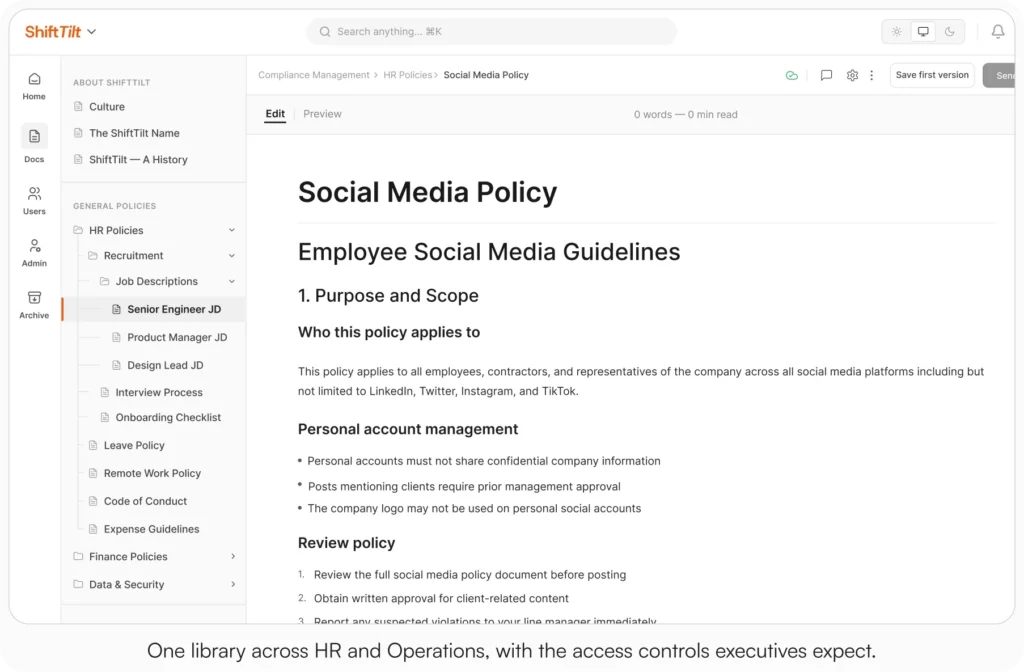
With tag-based organization and powerful search, teams find information quickly rather than recreating existing work. The result is a knowledge ecosystem that grows with your organization while preserving institutional wisdom.
Documentation as a strategic investment
Comprehensive documentation isn’t merely a compliance or administrative task. It’s a strategic investment that yields returns across multiple dimensions of organizational performance. For CHROs and COOs alike, prioritizing documentation delivers tangible benefits to the workforce, operations, and the bottom line.
Organizations that fail to prioritize documentation fall into inefficiency, non-compliance, and operational silos. Those that invest in structured knowledge management create a workplace that’s productive, scalable, and future-ready.
The question isn’t whether you need documentation. It’s whether your organization can afford to operate without it.
Start your 30-day free trial. No credit card to start, and a 30-day money-back guarantee if you convert and change your mind. Or try the live demo to see how cross-departmental documentation looks in practice.
Not ready for a trial? Migration from Confluence, Notion, SharePoint, or Drive is on us when you decide. We’ll move your existing docs over and have you running in about a week.
Frequently asked questions
What’s the difference between documentation and a knowledge base?
Documentation typically exists as scattered files across various platforms. A knowledge base organizes information into a searchable, interconnected system where employees find related content and trace decision-making processes. Think of documentation as individual puzzle pieces, and a knowledge base as the complete picture.
How long does it take to implement an enterprise knowledge base?
Implementation typically happens in phases over 3 to 6 months. Initial setup and core content migration happen first, followed by department-specific training and gradual content expansion. The key is starting with high-impact use cases rather than trying to migrate everything at once.
What types of content should be prioritized in a knowledge base?
Focus on information that gets requested frequently or causes delays when missing. This includes standard operating procedures, compliance policies, onboarding materials, vendor contacts, and decision-making frameworks. Emergency procedures and regulatory requirements should also be prioritized for risk management.
How do you measure knowledge base ROI for executives?
Track time-to-information, reduced duplicate requests, faster onboarding completion, and decreased escalation rates. Many organizations see measurable improvements in employee productivity within the first quarter and significant compliance risk reduction within six months.
Related reading
- HR Knowledge Base: Complete Guide for Scale-Ups
- How to Build a Knowledge Base for HR Teams
- Avoid HR Headaches: Stay Compliant without Legal Bottlenecks
- Notion vs AllyMatter for HR Policy Management
- How Knowledge Bases Can Help Deflect Tickets

Founder of AllyMatter I’m founder of AllyMatter, an operations-first knowledge base for growing companies. Before AllyMatter, I co-founded Syren Cloud and helped scale it into a 300-person organization across two countries, leading marketing, operations, and HR. We moved fast, served demanding customers, and learned the hard way that internal knowledge systems built for help docs or IT don’t solve day-to-day operations. AllyMatter is my answer—tools that turn tribal knowledge into trusted, searchable processes. This blog shares the playbooks, checklists, and lessons I wish I’d had while scaling.