
Product Updates · 2 min read
Save Approval Workflows to Reuse Across Documents
“Which approval process do we use for this?”
That question gets asked more often than it should. Someone finishes writing a data retention policy and needs it approved. They know it needs approval. They just don’t know by whom, in what order, or whether the process is the same one they used for the last policy or something different. So they ask their manager. Their manager asks compliance. Compliance says it depends on the document type. Twenty minutes later, a document that was ready to be reviewed is still sitting there because nobody could agree on the review process itself.
This is the kind of friction that doesn’t show up in any productivity report. It’s invisible. The document gets approved eventually, the right people sign off, and everyone moves on. But the fifteen minutes spent figuring out the process happened again last week, and the week before that, and it will happen again next Tuesday when someone else writes a different policy and asks the same question.
I’ve seen companies try to solve this with internal wiki pages that list which approval process applies to which document type. The wiki page is always out of date. Or it’s too detailed, covering edge cases nobody encounters. Or it exists but nobody knows where it is, so people default to asking in Slack, which is just the wiki page but slower and less reliable.
The problem isn’t that people don’t care about process. The problem is that the process lives in people’s heads instead of in the tool they’re using. Every time someone needs to approve a document, they’re rebuilding the workflow from scratch, choosing approvers from memory, hoping they’ve got the right sequence.
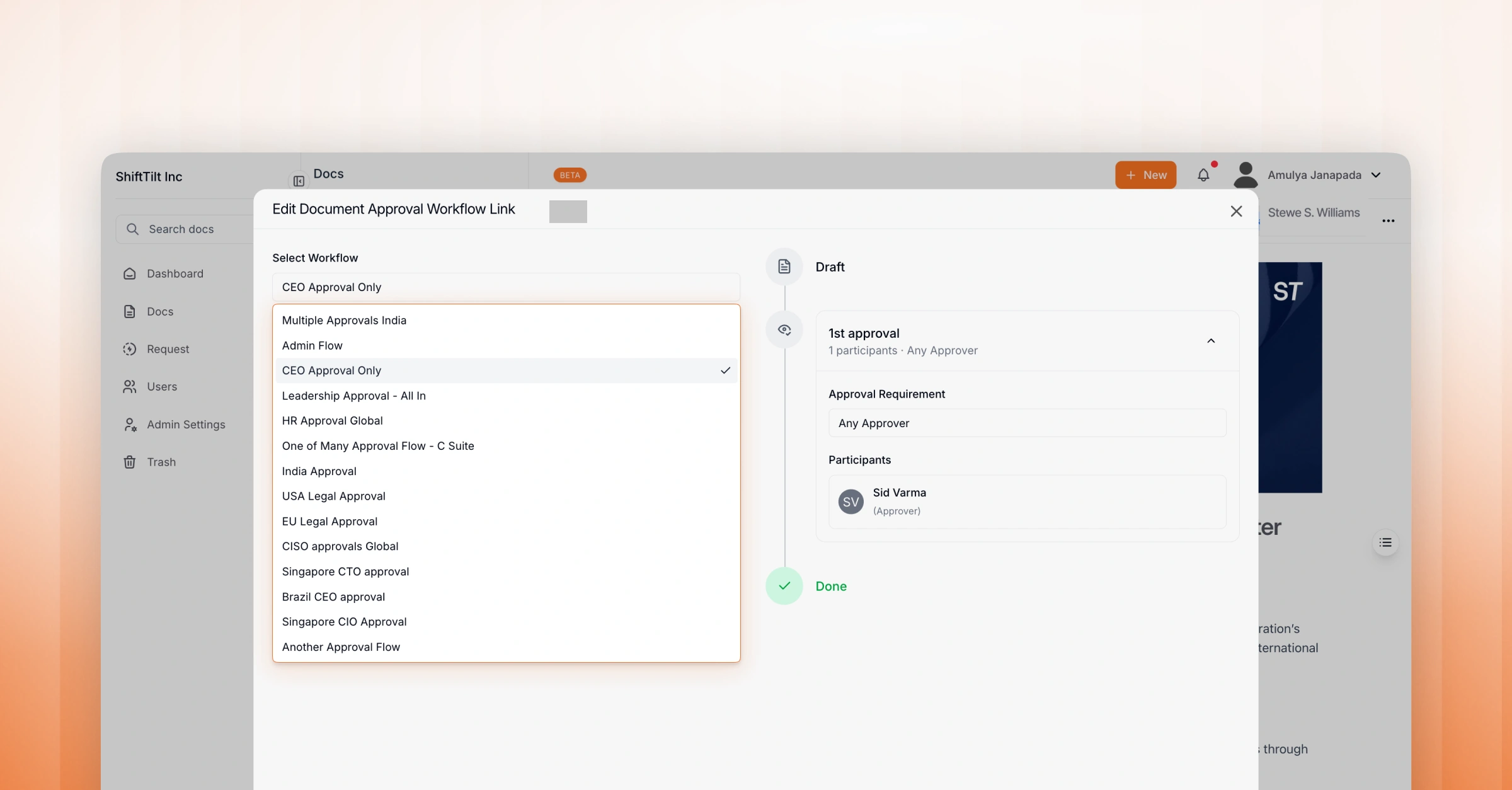
AllyMatter lets you name and save approval workflows so they can be reused across any document. Create “Legal Contract Review” with legal, the department head, and the COO in sequence. Create “Quick Manager Sign-Off” with a single approver. Create “Board-Level Review” for the sensitive documents that need four people. Name them clearly, save them once, and they appear in a dropdown every time someone needs to send a document for approval. The person writing the document picks the one that fits and the workflow handles everything else.
Nobody asks which process to use. Nobody rebuilds the chain from memory. Nobody messages compliance to double-check the sequence. The answer is in the dropdown, named clearly enough that choosing it takes less time than asking about it.
One dropdown. The right workflow for every document. The question never gets asked again.
If you’d like to see this in action, our sandbox is open at https://sandbox.dashboard.allymatter.app/. No sign-up required, just click around and try it yourself.
And if you like what you see, start a 30-day free trial. Every plan comes with a 30-day money-back guarantee, so there’s genuinely no risk. On yearly plans, we’ll even migrate your existing documentation for free. You bring the content, we handle the move.